
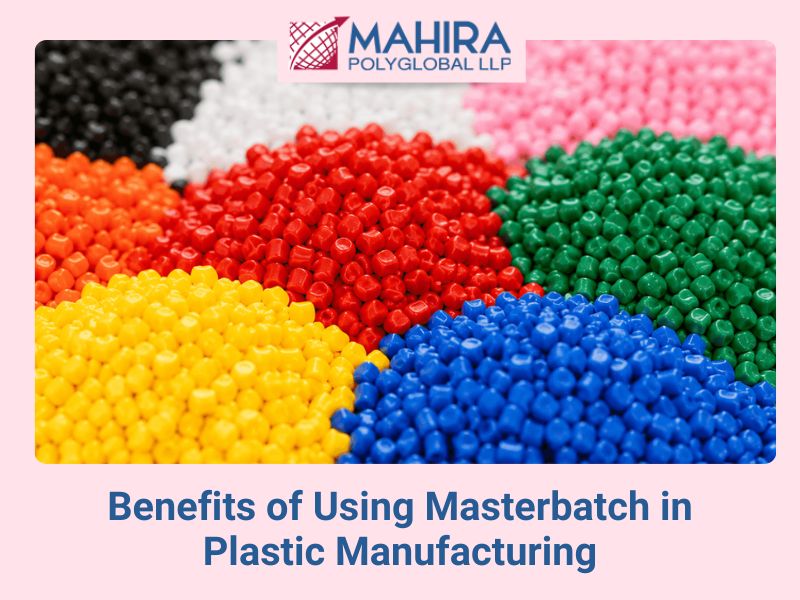
In the current highly competitive B2B plastics business, producers are always looking for ways to enhance the quality of their products and reduce production costs. The most efficient strategies employed by the top plastic processing firms is masterbatch. Masterbatch has emerged as an essential ingredient in the production of plastic and offers significant advantages in the areas of color consistency functional performance, cost efficiency and sustainability. When you make packaging films or construction materials, automotive components or consumer products knowing the benefits of masterbatch will help you optimize the manufacturing process and improve your position in the market.
What Is Masterbatch in Plastic Manufacturing?
Masterbatch, also known as a concentrate mix of additives or pigments, encased in a matrix of carrier like wax or resin. The concentrated mixture is then diminished during the plastic extrusion or molding process in order to attain that desired colour or properties of your final item. As opposed to loose pigments and the raw ingredients, masterbatch is in granules, which makes it simpler to manage as well as store and measure precisely during the production.
The masterbatch’s additives are selected with care to bring specific physical properties changes to the finished plastic. These may include increased strength, stiffness and flexural properties adhesion, printing ability the antistatic property, slip performance and anti-blocking capabilities. Modern masterbatch formulations can be found for nearly every polymer, which includes polyethylene (PE) and polypropylene (PP) ABS, PVC, along with engineering polymers.
Key Benefits of Using Masterbatch in Plastic Manufacturing
1. Superior Color Uniformity and Aesthetic Quality
One of the main reasons B2B manufacturers select masterbatch is due to its outstanding color uniformity. Masterbatch provides an even distribution of color across the plastic essential in applications that are that are driven by aesthetics. When dealing with large orders for production masterbatch provides users with better uniformity in color and minimizes the chance of a variance during the production process.
For applications that require a final touch, such as car trim or appliances for the home having a uniform shade of color is vital to establish brand identity and ensure customer satisfaction. Masterbatch manufacturers to create vivid uniform colors that improve general appearance and appeal of items as well as textiles and packaging materials. As opposed to raw pigments masterbatch allows for greater precision in controlling the transparency and opacity of the final color products.
2. Substantial Savings on Costs and Avoidance of Wastage
Masterbatch helps save a lot of costs by avoiding wastage and utilizing resources effectively. As masterbatch is highly rich in active constituents such as pigments and other constituents, only small quantities of it are needed in each batch for getting the desired effects. Consequently, this helps save costs on raw material utilization.
Utilizing weather-resistant masterbatch or packaging grade masterbatch will reduce waste material by a significant amount in comparison to loose pigments or additives that require greater quantities. The masterbatch’s concentration makes sure that only a small amount are required, thus reducing production time and reducing the waste. When it comes to large-scale production, the use of masterbatch can significantly increase productivity, and also reduces the amount of raw materials wasted.
3. Simplified Processing and Reduced Production Complexity
Masterbatch is much simpler than using loose pigments and other additives. It simplifies the production process and makes it much easier to measure, mix and integrate the granules into the polymer during the production process. Because masterbatches are premixed formulations and can be used to solve the issue of insufficient dispersion of colors or additives when combined with raw substances.
Masterbatch aids in streamlining the manufacturing process and increase efficiency. The melting process is enhanced because the binding agents present in masterbatch match with polymers used to make the product. The application in an additive masterbatch increases consistency and process stability by ensuring better dispersion.
4. Customized Formulations for Specific End-User Applications
Formulations can be changed by masterbatch suppliers in order to tailor their products to suit the exact specifications of the end-users. The formulation can be customized to have unique colors, various hues, unique effects, and even some specialized functionalities. Customization is important for business-to-business customers seeking plastic materials customized to their applications.
For instance, manufacturers could add specific additives to improve specific properties that are required for the application. For instance, UV stabilizers to enhance the properties of plastics, thereby making them more suitable for outdoor use in demanding conditions. Masterbatches that contain additives can boost the volumetric output of a product due to the conductivity of heat and volumetric expansion at a specific temperature. They can also alter the electrical conductivity that is permanent to the material that they are used on and prevent the problems caused by static electric charges.
5. Enhanced Product Performance and Durability
Masterbatches dramatically improve their overall effectiveness of materials made from plastic. They can improve quality, durability as well as resistance to environmental influences. By enhancing the fundamental physical and functional properties masterbatches make sure that plastic products are able to meet the requirements of a variety of applications in different industries.
Masterbatch may contain various functional additives that improve performances of the plastic for example, improved antistatic properties resistance to slipping and anti-blocking capabilities. Certain masterbatches can also improve the flexibility, durability, or abrasion resistance. These improvements in performance are essential for use in construction, automotive, agricultural as well as industrial packaging where plastic components have to withstand tough environments.
6. Sustainability and Environmental Benefits
Modern masterbatch formulations for packaging grade are being developed with sustainability in the back of their minds. They improve the utilization of raw materials reduce waste and could even be utilized in conjunction to recycle plastics. By enhancing production efficiency and reducing the number of defective products masterbatch can contribute to a more sustainable plastic production.
Innovative research and development has led to the development of masterbatches that encourage biodegradability of plastics, which is paving the way to more environmentally sustainable manufacturing practices. In a fast-growing the plastics sector, masterbatches are playing an essential role in promoting sustainable innovation in products.
Industry Applications of Masterbatch
Masterbatch is used in a variety of B2B industries like:
- Industry of packaging Food packaging films and stretch wraps, shrink wrap and industrial bags
- Automotive sector Trim for the interior and dashboards, bumpers, dashboards and components under the hood.
- The construction industry pipes fittings, profiles, and insulation materials
- Agriculture Films for Greenhouses film, mulch films, as well as irrigation pipes
- Consumer products household appliances furniture, toys, and personal care container containers
- Electronics and electrical cables connectors, cables and electronic enclosures
Each application reaps masterbatch’s specific benefits whether it’s color coherence for packaging used by consumers as well as UV-resistant construction materials for outdoor use.
Frequently Asked Questions (FAQs)
Q1. What is the primary benefit of masterbatch over loose pigments?
The most important benefit is greater color consistency, which is accompanied by ease of handling. Masterbatch guarantees uniform distribution of colors with the least amount of variation during production as well as eliminating dust concerns and the risk of contamination that comes by loose dyes.
Q2. What is the average amount of masterbatch added to the production of plastic?
Since masterbatch contains a high amount in active components, just a tiny quantity is required for each batch, usually 1-4%, based on the desired hue and the desired functional property. This concentrated formulation minimizes the amount of waste produced and reduces overall costs of production.
Q3. Can masterbatch be made use of recycled plastics?
Yes, modern masterbatch formulations are now being designed to utilize recycled plastics. They can be utilized in conjunction with recycled materials in order to improve the use of raw materials and to support sustainable manufacturing methods.
Q4. What kinds of additives are available to be added to masterbatch?
Masterbatch may contain various functional additives like UV stabilizers, anti-static agents anti-block agents, flame retardants as well as antioxidants, slip agents along with antiviral and antioxidant additives. These additives improve specific properties according to the needs of the application.
Q5. Is masterbatch a good option for small-scale plastic makers?
Masterbatch can be economical for companies regardless of size. Its concentrated formulation means less materials are required and the streamlined processing decreases manufacturing errors and costs. Small-scale companies benefit from less production waste and better consistency of the product.
Q6. What is the role of masterbatch in the sustainability of the plastics industry?
Masterbatch can contribute to sustainability by maximizing the use of raw materials by reducing waste, increasing the life of products by enhancing durability, and permitting the recycling of plastics. Certain formulations that are advanced even encourage biodegradability of plastics.
Conclusion
Masterbatch’s advantages in the production of plastics are evident and well documented across in the plastic industry B2B. From improved color consistency and substantial cost efficiency simple processing, customizing formulations, improved product performance and sustainability advantages, masterbatch provides the most comprehensive solution to modern plastics manufacturers.
For B2B manufacturers of plastics, investing in a high-quality masterbatch will result in improved product quality, less operational expenses, and increased competitiveness in the market. When you’re manufacturing packaging films or construction materials, automotive components or consumer products masterbatch guarantees high-quality outcomes while reducing waste and increasing overall efficiency.