
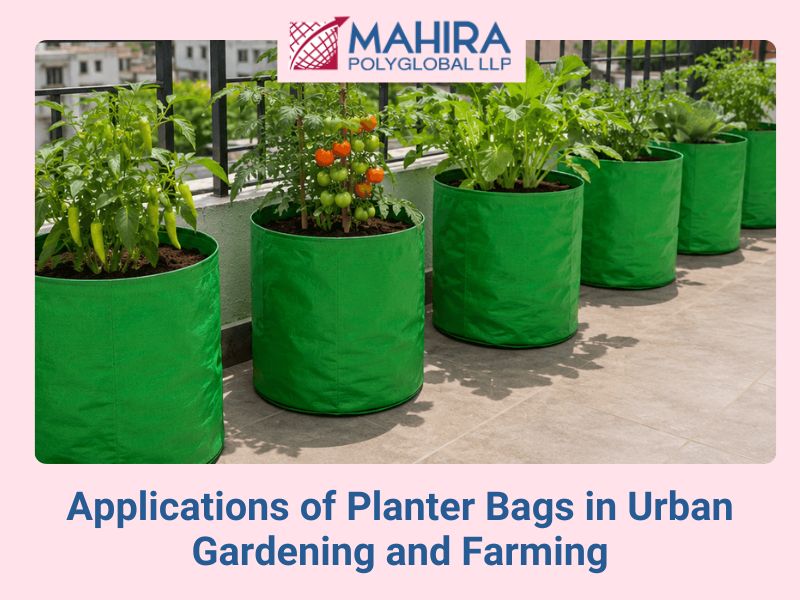
Urban farming and gardening have changed dramatically in the last few times, particularly as cities grow and green spaces diminish. One of the innovations driving this transformation is the planter bag sometimes referred to as grow bags. These flexible fabric containers provide practical solutions to urban settings while also delivering excellent results for the health of plants. For planter bags exporter, such as urban farms, commercial nurseries businesses, landscaping firms, as well as retail gardens, knowing the use of planter bags opens up significant business opportunities in the booming sector of sustainable agriculture.
What Are Planter Bags and Why They Matter for Urban Agriculture
Planter bags are breathable containers made of fabric specially designed to grow plants that do not require conventional hard-pots. Made of geotextiles that are not woven which are often UV-stabilized polypropylene these bags are able to provide superior drainage, airflow, and root development when compared with typical plastic pots. The breathable fabric blocks roots from circling like they do in pots with smooth walls rather, promoting fibrous root systems by an air-pruning process. This process of natural root pruning results in healthier, stronger plants that grow quicker and yield better.
In urban areas in which space is limited and soil quality can vary dramatically planter bags remove the requirement for in-ground gardening and offer mobility that hard containers aren’t able to compete with. Businesses that want to supply urban farmers gardeners on balconies, and gardening programs for communities find plants bags becoming increasingly popular with consumers who appreciate durability and ease of use.
Key Applications in Urban Gardening Environments
Balcony and Rooftop Vegetable Production
Urban dwellers who have little outdoor space can utilize planter bags extensively to grow vegetables, herbs and fruit on rooftops and balconies. Contrary to the heavy ceramic or plastic pots, cloth grow bags weigh considerably less when full which makes them suitable for spaces that have weight limitations. Commercial vendors is able to target apartment complexes, condominium associations, as well as farmers operating on rooftops who require solid container solutions for their the production of large quantities of vegetables.
The vegetables like tomatoes peppers, eggplants and the likes of lettuce and herbs thrive in planter bags that range between 5 to 20 gallons. The air-tight material keeps them cool during the summer months, which is which is a major benefit for sun-drenched rooftops where plastic pots could be prone to damaging temperatures. For B2B sellers, providing bulk packs of various sizes makes your company an all-inclusive solution Planter Bags supplier for urban vegetable farms.
Small-Scale Commercial Farming Operations
Urban farms that operate on abandoned land, parking lots or industrial areas that have been repurposed are increasingly dependent on planter bags to ensure efficient production of crops. They benefit from the flexibility aspect of crops. They can be relocated to ensure optimal sunlight exposure, rotated to aid in succession planning and even moved inside during extreme weather events. The capability to plant grow bags in a way that is partially or totally in the ground is also a flexibility in the deployment strategy.
Urban farms that are commercial and grow high-value crops such as microgreens speciality lettuces and culinary herbs, find the planter bags to be economically beneficial in comparison to conventional greenhouse infrastructure. The lower cost of initial investment per planter bag allows quicker scaling and lower the risk of financial loss for new startups that enter the market of urban agriculture.
Community Gardens and Educational Programs
Urban community gardens utilize planter bags to maximize the amount of plants that can be planted in small areas while also providing an equal plot allotment to several gardeners. Schools that integrate gardening into the curriculum prefer grow bags because of their security (no cutting edges) and flexibility for classroom demonstrations and their ease of storage during breaks in school.
B2B vendors targeting city parks authorities, schools districts, and non-profit organisations are able to offer planter bags as sustainable and affordable alternatives for community involvement programs. The institutional buyers usually buy in bulk for events that are seasonal, and create ongoing revenue streams.
Advantages Driving Business Demand for Planter Bags
Superior Root Health and Plant Performance
The air-pruning mechanism of fabric grow bags is fundamentally changing the way that plants develop root systems. Once the tips of the roots reach the fabric’s surface that is breathable the air is able to stop further elongation, and causes branches, resulting in dense, fibrous root networks. This causes plants to absorb nutrients and water more effectively, grow quicker after transplanting, and have higher yields when as compared to containers-grown varieties.
Nursery businesses that sell starting plants, planter bags creates top-quality inventory that is able to command the highest prices. Landscaping businesses profit from healthier transplants due to less transplant shock, resulting in higher the success of projects and increasing customer satisfaction.
Space Efficiency and Storage Convenience
When not being used, unfilled planter bags can fold flat, and require only a small amount of storage space as compared to rigid ceramic or plastic pots. This benefit is crucial when it comes to retail garden centers with little space for warehouses landscaping companies that manage seasonal inventory and urban farms that operate in cramped space.
The lightweight design of grow bags, even when they are full makes them easy to move around for optimal growth conditions, or for seasonal rearrangements. Businesses can save on costs for equipment because fewer movers and mechanical equipment is required when compared to traditional containers.
B2B Market Opportunities and Target Segments
Wholesale Distributors and Retail Garden Centers
Wholesalers of Planter Bags and chain stores can make a distinction in their containers by incorporating planter bags in addition to traditional pots. The increasing demand of consumers for urban gardening options boosts sales especially in urban cities with high density of apartment. Private-label options allow retailers to increase brand loyalty while ensuring good margins.
Commercial Nurseries and Plant Propagators
Nurseries that produce linesr plant, containers stock and landscape specimens are increasingly utilizing planter bags as production stages. Superior root development results in transplant-ready plants more quickly, which speeds up inventory turnover while reducing expenses per unit. Nursery owners report an improvement in the quality of their plants that justify the higher price at retail and wholesale levels.
Urban Farming Technology Companies
Agri-tech companies that are developing vertical farming systems and automated irrigation solutions and smart infrastructure for growing incorporate planter bags to serve as their main growth vessel. They require reliable bulk providers who offer the same quality, competitive pricing and scalable delivery logistics. Making relationships with urban farming technology companies can result in long-lasting B2B revenue streams.
Providers of landscaping and horticultural services.
Professional landscapers who design container-based plantings for residential and commercial developments and public spaces are frequently recommend planter bags for their flexibility in installation and plant health advantages. The service providers are impressed by the lower maintenance requirements and the improved survival rates, which improve retention of customers.
Practical Considerations for B2B Buyers
If you are looking for planter bags manufacturer to use in commercial purposes, take note of the material’s thickness as well as UV stabilization qualities and the expected life span. Geotextiles of higher quality can withstand a variety of seasons of growth despite the harsh urban conditions, including high sunlight exposure and temperature variations. Check that the fabric meets standards of safety for safe food expanding applications, specifically for the production of vegetables.
The size of the variety is important for catering to various customers. There are a variety of sizes available, from 1 gallon bags for starter plants and herbs to 50-gallon containers that are suitable for trees and large-scale agricultural production of vegetables. Handles that are integrated into larger bags increase the usability of the bags and increase customer satisfaction.
Pricing strategies must take into account the volume discounts that make plantser bags competitive with traditional containers, while ensuring healthy margins. Make sure to emphasize the all costs of ownership, including less loss of plant, less consumption of water, and higher yields when pitching commercial buyers.
Frequently Asked Questions About Planter Bags
Q1. What size of planter bags are the best for storing vegetables?
The majority of plants thrive when placed in 5 to 10-gallon containers for planters. Tomatoes, peppers and eggplants are all well-suited to 7-10 gallon containers. Meanwhile, herbaceous greens and leafy greens grow efficiently in bags of 3-5 gals. Root vegetables such as carrots and radicles require minimum 5gallons to ensure sufficient depth.
Q2. How long can grow bags made of fabric last?
High-quality UV-stabilized planter bags generally last for 3 to 5 years when properly cared for. The fabric can thin gradually but it will still function during this time. Businesses should budget for replacement every couple of seasons to ensure that the fabric is performing at its best.
Q3. Planter bags can be reused in between seasons of growth?
Yes, they can be simple to wash and reuse. Clean the soil and empty it, then rinse bags with water and let them dry completely prior to storing flat. Many commercial businesses are able to reuse bags over multiple seasons, increasing efficiency and cost.
Q4. Does a planter bag need specific watering methods?
Grow bags made of fabric dry faster than plastic pots because of their breathability which means they require more frequent watering in the summer months. But, the great drainage helps prevent problems with overwatering. The drip irrigation system works in conjunction with planter bags to support commercial businesses. comsyn+1
Q5. Do planter bags appropriate to be used for tree production?
The large planter bags (20-50 gallons) can be used to grow young trees prior to transplanting. The air-pruning process produces roots that are dense and establish quickly following planting. Nurseries that grow ornamental trees and fruit trees often use large grow bags to produce.
The applications of planter bags in urban gardening and farming continue expanding as cities embrace sustainable food production and green space creation. For B2B suppliers, this represents a growing market with diverse customer segments and strong growth momentum. By understanding the practical benefits and specific use cases outlined above, businesses can position themselves effectively in the urban agriculture supply chain while helping customers succeed with their growing operations.